


Hex Takeover
4.1503.00 Reviews
App Specs
- Version
- 1.7.7
- Updated On
- License
- Free
- Downloads
- 1,000,000+
- Developer
- VOODOO
- Categories
- Strategy
- Platform
- Android
Screenshots
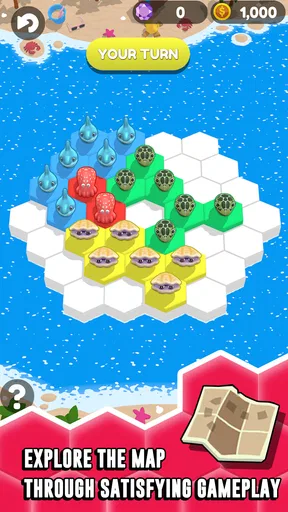
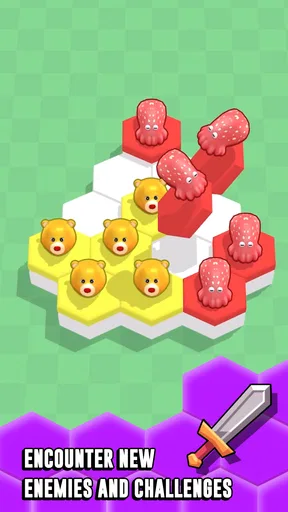
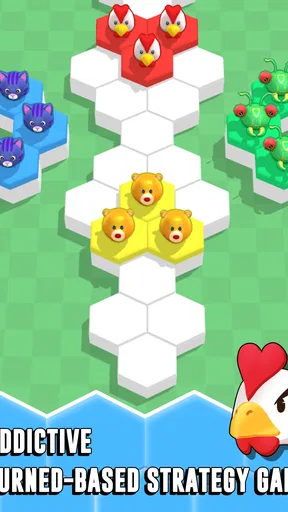
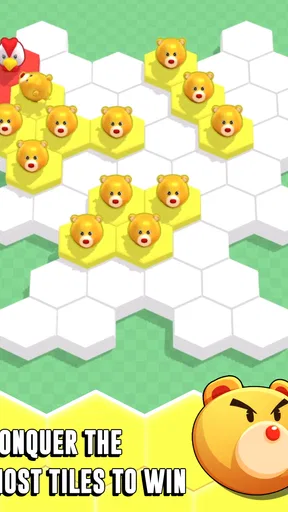
 Analysis by AppCompare
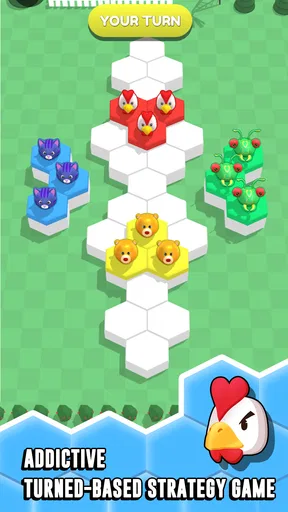
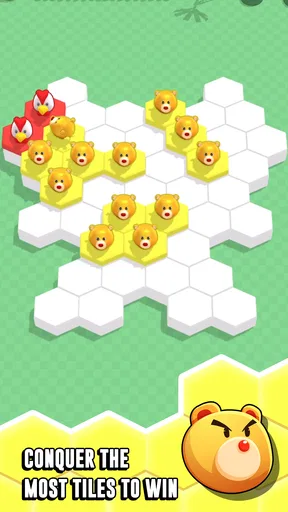
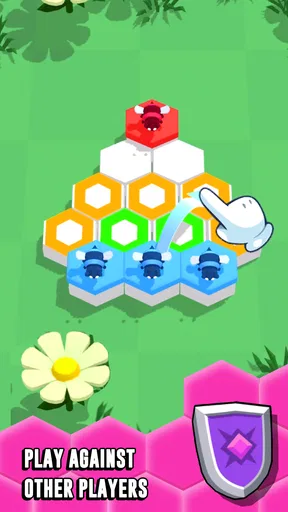
Hex Takeover is the kind of strategy game I can open for a quick break and still find myself thinking about several moves later. Its central idea is easy to understand: claim space on a hexagonal board, expand your territory, and try to leave the opponent with fewer useful options. What makes it interesting is not a large collection of systems, but the way every placement can change the shape of the whole board.
After spending time with it, my main impression is clear: this is a compact, accessible strategy game that rewards planning without asking me to learn a complicated rulebook. It is free to play, made by VOODOO, and listed for Everyone, so it is easy to recommend as a casual introduction to turn-based territory strategy. At the same time, players looking for a deep campaign, a story, or a large competitive ecosystem may find its focused design too narrow.
Why the hexagonal board makes simple moves feel important
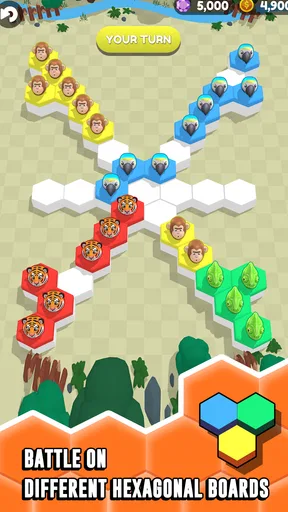
The appeal comes from the board itself. Hexagons create more neighboring connections than a square grid, so a move rarely affects only one direction. I have to look at nearby spaces, possible expansion routes, and the areas that could become contested next. That makes the game feel more thoughtful than its minimal presentation initially suggests.
The basic objective is approachable enough for a first session. I do not need to memorize a long list of unit abilities or manage resources across several menus. Instead, I concentrate on territory and timing. That simplicity is a genuine strength because it lets the strategic question appear quickly: should I take the nearest available space, protect the shape I already control, or move toward a position that may become valuable later?
The best moments arrive when a move has two purposes. A placement can improve my own position while also blocking an opponent’s convenient route. I found that these defensive decisions are often more satisfying than simply grabbing the largest visible area. A territory that looks impressive can still be fragile if it has awkward edges or leaves an important gap open.
That is where the game differs from many lightweight mobile strategy titles. It does not depend on a long upgrade path to create interest. The board provides the tension. Each round asks me to read a changing pattern, and the value of a space depends on what surrounds it rather than on an isolated score.
How I approach the opening turns
My most useful habit was to avoid treating the first available move as automatically correct. Early expansion can be tempting, but spreading too quickly may create a thin shape that is difficult to defend. I get better results when I first consider which areas connect several future routes and which spaces could let the opponent approach from multiple sides.
Worth Reading Before You Choose

EA SPORTS FC Mobile 26 Is a Bigger Football Game, but It Takes Time

Flipboard Shows What News Apps Must Do Beyond the Feed

Switching to Android Auto Means Rethinking Your Driving Routine

Google Calendar Makes a Crowded Week Easier to Manage

Ludo King Makes the Most of the Minutes Between Plans

Baby Panda World Brings Quick Play to Modern Phones, but Its Game Library Feels Busy
I also try not to judge a position by territory count alone. A smaller, compact area can be more useful than a larger shape with exposed edges. This is one of the less obvious lessons in Hex Takeover: shape and access matter as much as immediate area. That idea gives the game more depth than its quick-play format suggests.
Another practical tip is to look beyond the move I want to make and imagine the reply it invites. If taking a space gives the other side an obvious counterattack, the apparent gain may not be worth it. I often pause for a moment before confirming a move, especially when two neighboring spaces seem equally attractive. That brief check helps reveal whether I am creating a strong position or merely reacting to what is directly in front of me.
This makes the game suitable for short sessions with a little mental focus. I can play while waiting for an appointment, but I do not get the best experience when I rush through it. The controls may be simple, yet the consequences of a careless tap can be surprisingly difficult to undo.
The strongest part is the balance between accessibility and planning
Many strategy games fall into one of two extremes. They are either so simple that decisions feel interchangeable, or so layered that a new player spends more time studying systems than playing. This game sits closer to the middle. Its rules can be understood quickly, while the board still gives me reasons to reconsider familiar patterns.
I especially like that the game encourages visual thinking. Instead of tracking a large collection of statistics, I read connected areas, open routes, and vulnerable borders. That makes it a good choice for someone who enjoys puzzles but does not necessarily want a traditional puzzle game with fixed solutions. The position changes from round to round, so the same opening idea does not always produce the same result.
It also works well as a low-pressure introduction to strategic planning for younger players or adults who normally avoid complex strategy games. The Everyone age rating supports that broad accessibility. I would still explain the importance of looking ahead rather than expecting instant success, because the simple rules do not mean every match is effortless.
The presentation serves this purpose by keeping attention on the board. I never felt buried under unnecessary interface elements. That focus is valuable on a phone, where a crowded screen can make a strategy game tiring. The trade-off is that players who want elaborate visual spectacle may find the experience restrained.
Where the design starts to feel limited
The same focus that makes the game approachable also limits its long-term variety. Once I understood the main rhythm of expanding, protecting, and cutting off routes, some sessions began to feel familiar. The game can remain enjoyable as a short strategic exercise, but it does not offer the kind of broad progression that keeps every type of player engaged for months.
This is the most meaningful weakness in my experience. I can appreciate a compact match, yet I sometimes want more context around the decisions. A campaign with distinct challenges, more clearly differentiated scenarios, or a stronger sense of personal progression could make the board feel fresh for longer. I would not call this a flaw in the core concept, but it does affect who should install it.
There is also a difference between wanting a quick mental challenge and wanting a full strategy hobby. If I am looking for detailed resource management, varied factions, narrative objectives, or a substantial long-term build, this is not the right destination. A larger strategy title will offer more systems and more room for specialization, even if it takes longer to learn.
The free price makes trying it easy, but the presence of in-app purchases is worth keeping in mind. Items range from $1.99 to $99.99, so I would recommend checking purchase settings before handing the device to a child or anyone who may tap through offers quickly. The game can be approached as a free download, but players who dislike any purchase prompts may prefer a paid game with a simpler commercial model.
A realistic everyday use case
Imagine having ten minutes before a train arrives. A large strategy game would be a poor fit because it might require a long uninterrupted session or careful management across several screens. Hex Takeover is more suitable for that moment. I can begin a board, make a few deliberate decisions, and stop when I need to leave without first learning a complicated control system.
It also fits a short evening break when I want something more engaging than endless scrolling. I can use one session to practice reading board shapes rather than chasing a long checklist of tasks. The useful routine is to review the last few moves after a loss: did I expand too far, ignore a connecting space, or allow the opponent an easy route around my border? That small habit turns casual play into genuine improvement.
For families, I would frame it as a shared thinking game rather than a purely relaxing one. The rules are accessible, but the best decisions are not always obvious. A parent can discuss why a compact territory may be stronger than a larger one, or why blocking a route can be more valuable than claiming another isolated space. Those conversations give the game more value than simply taking turns tapping the board.
Who will enjoy it, and who should skip it
I think it is a strong fit for players who enjoy abstract board games, territory puzzles, and short sessions with meaningful choices. It is also a sensible starting point for anyone curious about strategy but put off by games filled with menus, currencies, unit trees, and lengthy tutorials. The core appeal is immediate enough to understand, while the board still rewards patience.
It is less suitable for someone who needs constant novelty. If you prefer a story-driven adventure, a large roster of characters, or a competitive game built around frequent content changes, the focused board may feel repetitive. Players who want a calm game with almost no pressure may also find the strategic tension more demanding than expected, particularly when a small mistake changes the shape of the match.
Compared with classic board-game adaptations, this feels more spontaneous because the board is designed for quick mobile play rather than a long tabletop gathering. Compared with larger strategy games, it is far easier to pick up but much less expansive. Compared with idle or merge games, it asks me to think actively instead of waiting for progress or combining objects. Those differences make its audience fairly clear: it is for people who want decisions, not decoration or passive advancement.
Device and purchase considerations
The game supports devices running Android 8.0 or later, which makes it accessible on a broad range of compatible phones and tablets. Its current version is 1.7.7, and the project was released on Jun 25, 2021. Those details are useful when deciding whether an older device can run it, although actual comfort will still depend on the screen size and how easily you can inspect neighboring spaces.
Its popularity is visible in the store, with over 1M installs and a 4.1 average from around 4.7K ratings. That gives me reasonable confidence that the basic concept has found an audience, while the rating also suggests this is not a universally perfect experience. The review count, at around 500, adds some context without changing my own conclusion: the game succeeds most when judged as a focused strategy diversion rather than a complete strategy platform.
I would begin without spending anything and decide later whether the experience justifies optional purchases. Since the item range reaches $99.99, restraint matters more than the low entry barrier might suggest. For a child’s device, I would use the operating system’s purchase controls. For an adult, the sensible approach is to treat purchases as optional conveniences rather than part of the reason to install the game.
My final recommendation
Hex Takeover works because it understands the value of a clear board and meaningful placement. I enjoy the way a simple hexagonal layout turns ordinary-looking moves into decisions about access, shape, and timing. The game is easy to start, free to try, and approachable enough for casual players, yet it offers enough tactical thought to keep a short session from feeling empty.
Its limitations are just as clear. The focused format can become repetitive, and it does not replace a deeper strategy game with campaigns, extensive systems, or a richer sense of progression. The in-app purchase range also means I would pay attention to purchase controls, especially on a shared device.
My recommendation is therefore specific: install it if you want a compact territory game that rewards looking one or two moves ahead. Skip it if your ideal strategy experience depends on story, extensive customization, or constant new mechanics. For the right player, the small board is not a restriction; it is the entire challenge. That focused design is why I would keep it available for short breaks, even while recognizing that it is better as a sharp daily diversion than as my only strategy game.
Pros
- Simple rules make it easy to start playing immediately.
- Short levels fit well into quick gaming sessions.
- Territory expansion creates satisfying strategic momentum.
- Minimalist visuals keep the board easy to read.
- Works well for players who enjoy thoughtful
- low-pressure puzzles.
Cons
- Later levels can feel repetitive after the core strategy becomes familiar.
- Some puzzles may require trial and error rather than clear planning.
- Limited variety in objectives can reduce long-term motivation.
- Mistakes may force players to restart a level from the beginning.
- The calm pace may feel too slow for fans of action-focused games.
FAQs for Hex Takeover
What is Hex Takeover, and how does the gameplay work?
Hex Takeover is a turn-based strategy game built around controlling a board made of hexagonal tiles. You place and move units to capture territory, surround opposing pieces, and expand your influence across the map. Each move can change the balance of power, so successful play requires planning several turns ahead rather than simply occupying the nearest available tile.
Is Hex Takeover free to download and play?
Hex Takeover can generally be downloaded for free, allowing players to try the core gameplay without paying upfront. However, availability of advertisements, optional purchases, premium content, or platform-specific pricing may vary depending on the version installed and the device’s app store. It is worth checking the store listing before downloading if you want to avoid unexpected costs.
Can I play Hex Takeover offline?
Hex Takeover may support offline play for certain single-player modes, which makes it suitable for short sessions when you do not have a reliable internet connection. Online features, competitive rankings, cloud synchronization, or multiplayer functions may require a connection. Since offline availability can depend on the current version, check the game’s description and test the main modes after installation.
Is Hex Takeover suitable for beginners?
Hex Takeover is approachable for beginners because its basic objective—capturing and controlling hexagonal territory—is easy to understand. Nevertheless, the strategy becomes more demanding as opponents improve and maps become more complex. New players should begin with introductory levels, experiment with different opening moves, and pay attention to defensive positioning before attempting more challenging stages or competitive matches.
Does Hex Takeover include multiplayer or competitive features?
Hex Takeover may include competitive elements such as battles against computer-controlled opponents, progression systems, challenges, or online matches, depending on the version and platform. Multiplayer availability should be confirmed on the official store page because features can change through updates. If online play is offered, a stable connection may be needed, and some modes could require an account or additional content.


